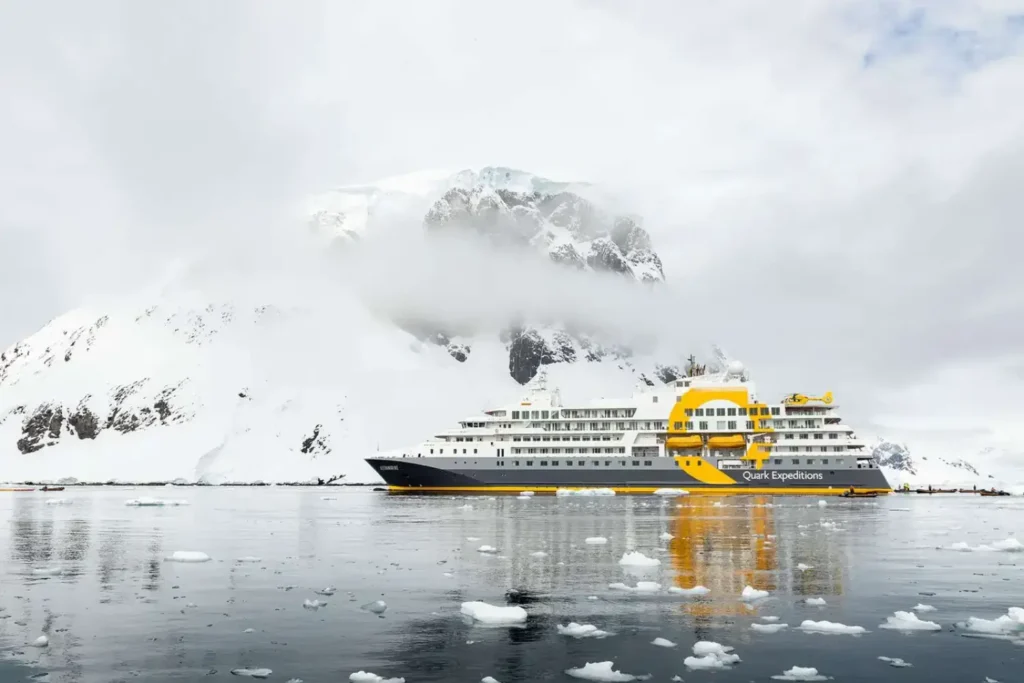
Approaching Greenland by expedition ship, the landscape announces itself slowly — fjords fractured into granite and ice, icebergs drifting like cathedral spires, cloudbanks lifting to reveal a coastline that seems untouched by time.
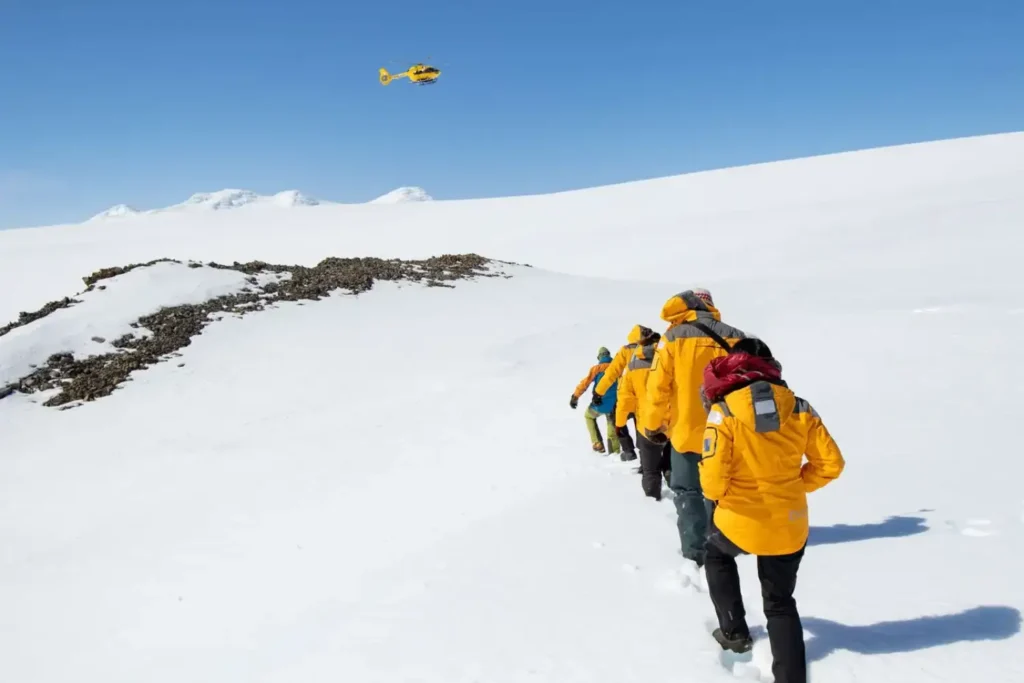
A helicopter flight from the ship carries guests inland over a frozen interior that extends to the horizon. Landing on the Greenland ice sheet is profoundly humbling: an expanse so vast and ancient it erases scale entirely. Guides often note that guests may be the first humans ever to stand on that precise patch of ice.
More than 80 percent of Greenland is permanently covered in ice, and stepping onto it feels less like sightseeing and more like witnessing a planetary force at work.
Expedition Cruising Without a Fixed Route
Unlike traditional cruises, expedition journeys along Greenland’s southern coast follow weather and opportunity rather than fixed ports. With no harbors and minimal infrastructure, itineraries remain fluid — an advantage in a land where fog, light, wildlife, and ice constantly reshape the day.
This flexibility allows expedition teams to chase clear skies, wildlife sightings, and safe landing conditions, accessing fjords and coastlines far beyond the reach of conventional ships.
Between outings, the ship itself becomes a sanctuary — a place of panoramic views, warm saunas, intimate lectures, and quiet moments that encourage reflection rather than distraction.
Heli‑Hiking, Kayaking, and Living Tundra
Daily excursions bring travelers deep into Greenland’s raw landscapes. Helicopters ferry small groups to high alpine plateaus dotted with mirror‑still lakes and wildflower meadows, tucked between razor‑edged peaks.
From there, guided walks reveal a surprising abundance of life in the Arctic summer:
- Fireweed and meadow buttercups
- Wild Arctic thyme and mountain sorrel
- Dwarf willows sculpted by cold and wind
Afternoons may find guests kayaking along fjord walls of ancient gneiss, paddling through water churned turquoise by calving glaciers. When a glacier breaks free, guides call kayaks together into tight formation to witness the moment safely — a reminder that Greenland’s beauty is dynamic, not static.
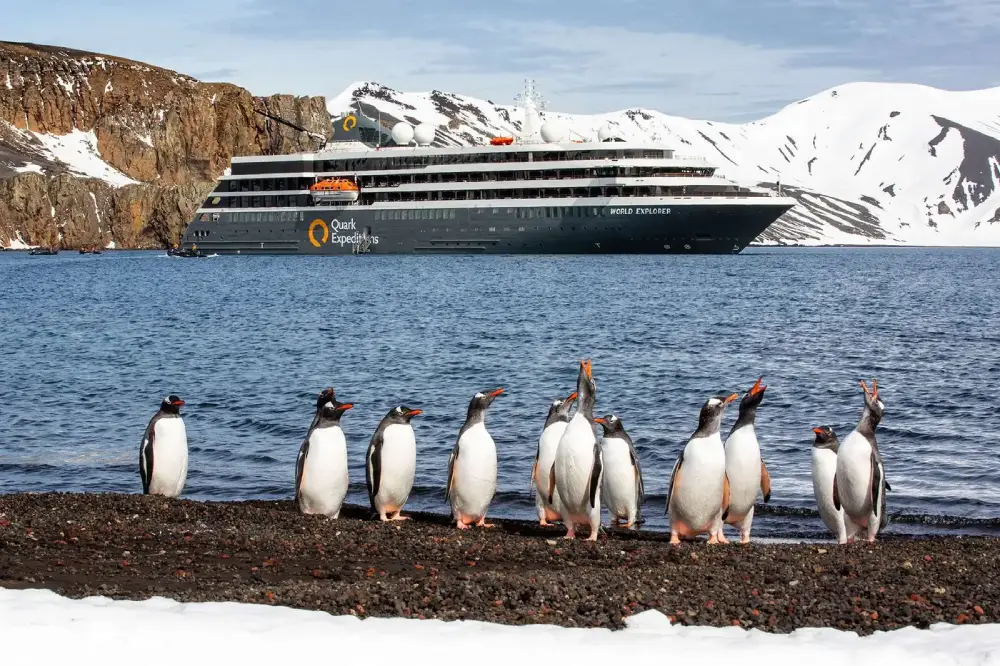
Wildlife sightings are never guaranteed, but this is polar territory: musk oxen graze tundra slopes, seals surface near Zodiacs, and whales pass through fjords heavy with food.
Greenland Is Also a Human Landscape
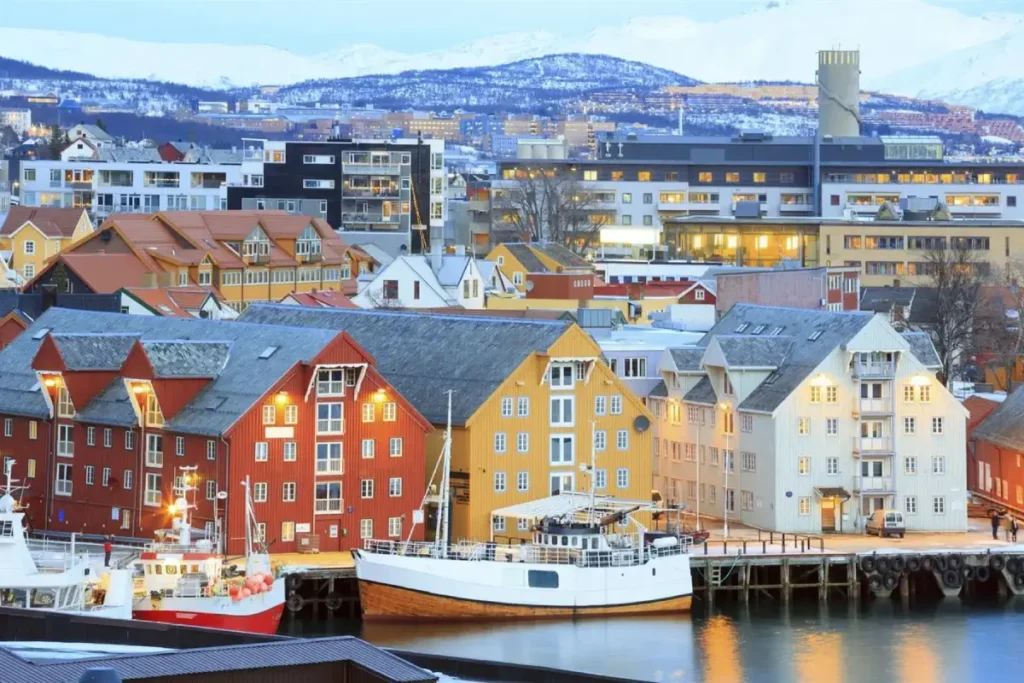
While Greenland feels vast and empty, it is not uninhabited. Small coastal communities dot the southern shore — some home to fewer than 100 residents — and expedition landings here focus on connection rather than spectacle.
In villages like Aappilattoq:
- Locals welcome guests into churches where Greenlandic hymns fill the space
- Fishermen mend nets beneath brightly painted homes
- Visitors are invited to join soccer games played between cliffs and sea
- Families host traditional kaffemik gatherings — coffee, cake, and conversation marking meaningful moments in Greenlandic life
These moments are not staged performances; they are cultural exchanges rooted in long‑standing relationships between expedition operators and local communities.
Cuisine Rooted in Respect for Land and Sea
On board, Greenlandic chefs bring the landscape directly to the table through Tundra‑to‑Table dining experiences. These meals highlight ingredients foraged from land and sea — snow crab, shrimp, Arctic char, angelica, mountain sorrel, and wild herbs gathered near ports of call.
Each dish carries stories. Chefs speak openly about Inuit values surrounding food: take only what you can use, waste nothing, and share what you have. These principles are woven into both cooking and storytelling.
Meals become cultural narratives, reinforced by Inuit mythology — including tales of Sassuma Arnaa (Sedna), the mother of the ocean, whose well‑being depends on humanity’s respect for animals and resources.
Overnight on the Tundra
One of the most profound experiences in Greenland is an overnight tundra camp. Reached by helicopter, the canvas tents appear almost impossibly small against the surrounding rock and sky.
Local guides welcome guests with stories drawn from both mythology and lived experience — from ancestral hunting traditions to modern Greenlandic life. Walks across the tundra release the scent of crushed herbs underfoot, while ancient Inuit gravesites remind visitors that this land has been sacred for centuries.
At night, a fireside meal of Arctic char and Greenlandic lamb is served beneath a sky that darkens just enough for stars to emerge. Near midnight, the Arctic summer settles into stillness — brief, luminous, unforgettable.
A Balance of Raw Adventure and Gentle Comfort
After nights on the tundra, returning to the ship feels like stepping back into hearth and home: warm saunas with fjord views, convivial afternoon teas, and long conversations over late‑night drinks.
This balance — wild exploration by day, thoughtful comfort by night — is what defines Greenland expedition travel at its best.
Why Greenland Resonates So Deeply
Greenland is not a destination to conquer or consume. It is a place that invites humility, patience, and listening — to glaciers, to stories, to silence.
For travelers seeking:
- Transformative adventure
- Genuine Indigenous cultural connection
- Environmental awareness rooted in experience
- A sense of standing at the edge of the known world
Greenland in summer delivers something rare and enduring.
The ice remembers everything. And for a short season each year, it allows us to visit.